
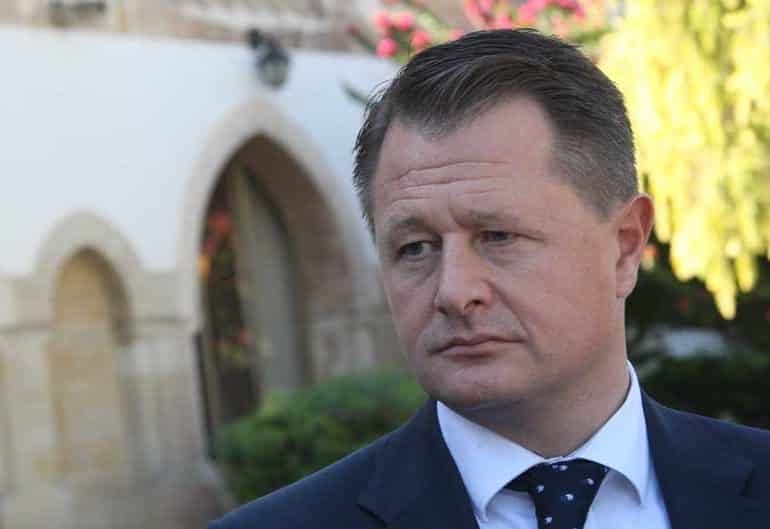
Andreas Charalambous, the second senior finance ministry official and board member to testify at the Co-op committee, on Wednesday said that the state-owned bank may have performed better if it had secured expertise from abroad.
If the Cyprus Co-operative Bank had utilised the experience of bankers from abroad, as was the case in other banks, or at least of Cypriots who had worked outside the island, the bank’s future could have been stronger, Charalambous told the committee appointed by Attorney-General Costas Clerides, tasked with probing the failure of the Co-op, according to the Cyprus News Agency (CNA).
The official was obviously referring to Bank of Cyprus, which in 2013 hired former Bank of Scotland executive John Hourican together with other bankers experienced in the management of delinquent loans. Likewise, Hellenic Bank had hired Bert Pijls in late 2014.
The progress in the area of corporate governance and managing non-performing loans achieved in the past five years by the Co-op, which the government recapitalised with €1.7bn in 2014 and 2015, was insufficient compared to the overall challenges to avert its breakdown, said Charalambous. He was appointed member of the board of directors of the Cyprus Co-operative Bank in March, three months before he tendered his resignation.
In the short period he served in the board, he saw other members trying their best, he said.
The official said that the sale of the healthy part of the Co-op to Hellenic Bank earlier this summer was the best available option, hence the board’s recommendation was to approve Hellenic’s offer.
He said that there was pressure to sell the Co-op’s operations from both the European Central Bank’s (ECB) Single Supervisory Mechanism (SSM) and the European Commission’s Directorate General Competition, following the government’s decision to issue of a €2.4bn bond in favour and to subsequently deposit €2.5bn at the bank in March.
The whole procedure led to a single offer and under the circumstance it was the only solution, he added.
The initial plan to list the Co-op share on the Cyprus Stock Exchange (CSE) and allow with capital increases to dilute the government’s stake to 25 per cent, that would have allowed a wide dispersion of the bank’s stock to a large number of persons, was met with resistance from the supervisors, as the CSE offers limited options in tapping capital, he said.
On the other hand, a strategic investor would have brought additional advantages, including better corporate structures and governance, areas in which supervisors spotted weaknesses, Charalambous said.
The official, who heads the finance ministry’s directorate of financial stability, said that increasingly stricter rules governing capital adequacy in the banking system led to the Co-op having to comply with a capital adequacy ratio of 14.25 per cent compared to an otherwise minimum 9 per cent. The trend is expected to continue, and capital requirements will be twice as much they are today in the banking sector.
Portfolio criteria became stricter and are expected to become even stricter in the further, he said, adding that mergers could allow the creation of larger banks that would be healthier, he said.
Countries in Northern and Central Europe form policies which unlike South European countries, which ask for more time to adjust given their private sector’s higher level of indebtedness, are financially in a better shape, Charalambous said. If the voice of the south was heard, procedures could be more gradual, he added.
He said that the recovery of the Co-op’s portfolio, comprised of loans to households and small and medium size enterprises (SMEs) portfolio, has a certain degree of difficulty.
While reducing non-performing loans was not easy as it would have affected growth, it could have happened gradually at faster rates to convince the supervisors, he said.
“You need to try to adjust to the framework that is being shaped.”
The official said that measures taken by the ministry had not proved sufficient to avert its collapse.
He added that while meetings of the financial stability committee which falls under the Central Bank of Cyprus and its governor, and a supporting technical committee, allowed opinions about systemic risks to be expressed, the macroprudential risk analysis and policies to address them were part of the system.
Talks take place at a technical level in the absence of a deep analysis, Charalambous said.
“We still have a way to go until we reach the desired outcome,” he said.
Currently, there is a competition in progress for the purchase of consultancy services by the residual Co-op which will manage its €7bn in non-performing loans stock and other assets that will not be transferred to Hellenic, he said.
After the completion of the deal with Hellenic Bank, the residual Co-op will have no banking licence but instead only a licence to buy loans and related consultancy services which will allow the best possible management of the remaining assets to the benefit of the taxpayer without political interference, he said.
The post Official says Co-op should have resorted to foreign expertise appeared first on Cyprus Mail.
Read more → https://cyprus-mail.com/2018/08/29/official-says-co-op-should-have-resorted-to-foreign-expertise/

Δεν υπάρχουν σχόλια:
Δημοσίευση σχολίου